

How Hedge Funds Use Job Posting Data to Make Smarter Investment Decisions
Why Timing Matters in Hedge Fund Strategy
For hedge funds, an edge often comes from seeing what others miss. That’s why many are now turning to job posting data, a nontraditional but timely dataset that can reveal operational and strategic changes ahead of earnings calls and filings. In 2024, Neudata reported that over 90% of institutional data buyers planned to maintain or increase spending on alternative data through 2025, with many firms allocating more than $5 million annually. Job posting trends are quickly becoming a critical tool for anticipating market shifts.
Why Job Posting Data Matters to Hedge Funds
Job postings, collected daily directly from company career sites, provide visible evidence of a company’s hiring activity and priorities.
- A surge in recruiting across divisions may signal expansion or a new product rollout. A drop in postings could indicate cost containment, restructuring, layoffs, or weakening demand.
- New roles in emerging fields like AI or clean energy may point to strategic shifts.
- Hiring data can help distinguish IPO winners from losers. Patterns such as scaling product, engineering, and international teams signal sustainable growth after the IPO, giving investors an early edge in spotting firms likely to thrive versus those that may struggle.
Real-Time Signals vs. Lagging Indicators
Traditional labor data and financial filings often lag behind events by weeks or months. And in 2025, government data sources themselves have come under heightened scrutiny. This has raised broader questions about whether official statistics can still serve as the sole foundation for business and market decisions. By contrast, job posting data captured directly from company websites or applicant tracking systems is often available within hours. A University of California, Irvine study found that hiring data tends to lead financial disclosures. This gives firms a valuable early signal, such as spotting a hiring spike before capacity expansion announcements.
Adding Fuel to the Fire: The BLS Data Crisis
In August 2025, the Bureau of Labor Statistics came under intense scrutiny following the firing of Commissioner Erika McEntarfer, triggered by weaker-than-expected job numbers and major revisions to previous months. Some politicians accused the agency’s data of being “rigged,” while economists across the board condemned the move as destructive to the BLS’s long-standing reputation for neutrality (Business Insider, 2025).
The real problem, however, lies in politics and the longstanding systemic vulnerabilities of government data. Even before the August 2025 firing, agencies like the BLS and JOLTS survey were challenged by underfunded infrastructure, falling response rates, and outdated collection methods that rendered preliminary job numbers increasingly unreliable.
At its core, this crisis isn’t just about one agency; it’s about whether economic data remains a trusted foundation for markets and businesses alike.
Building Quantitative Models with Hiring Data
Quantitative investment strategies rely on measurable, consistent signals. Job posting data fits this need due to its structured and time-stamped nature. Hedge funds can use this to:
- Track sector momentum.
- Combine hiring trends with valuation and other company data points to refine models.
- Backtest strategies using past hiring data.
Pre-IPO Intelligence
Hiring data can help distinguish IPO winners from losers. While many companies increase finance, compliance, and executive recruitment as they prepare to go public, the real challenge for investors is not guessing which firms will IPO, but predicting which will succeed afterward. By analyzing hiring patterns such as whether a company is scaling its product, engineering, and international teams versus simply meeting disclosure requirements funds can gain an early edge in identifying which newly public firms are positioned to grow versus those likely to struggle.
Recent IPOs further illustrate the value of hiring data. For example, CoreWeave’s job openings nearly doubled in the year prior to its March 2025 IPO, and the company’s stock has since climbed 140%. Similarly, Circle Internet Group increased job postings by 45% in the six months before its June 2025 IPO, and its stock is already up 86%. These cases highlight how pre-IPO hiring momentum can help investors distinguish potential winners from companies that may struggle once public.
Real-World Examples from 2025
Predictive Vacancy Trends
Recent examples show how job posting data can serve as an early indicator of company performance.
Booz Allen Hamilton
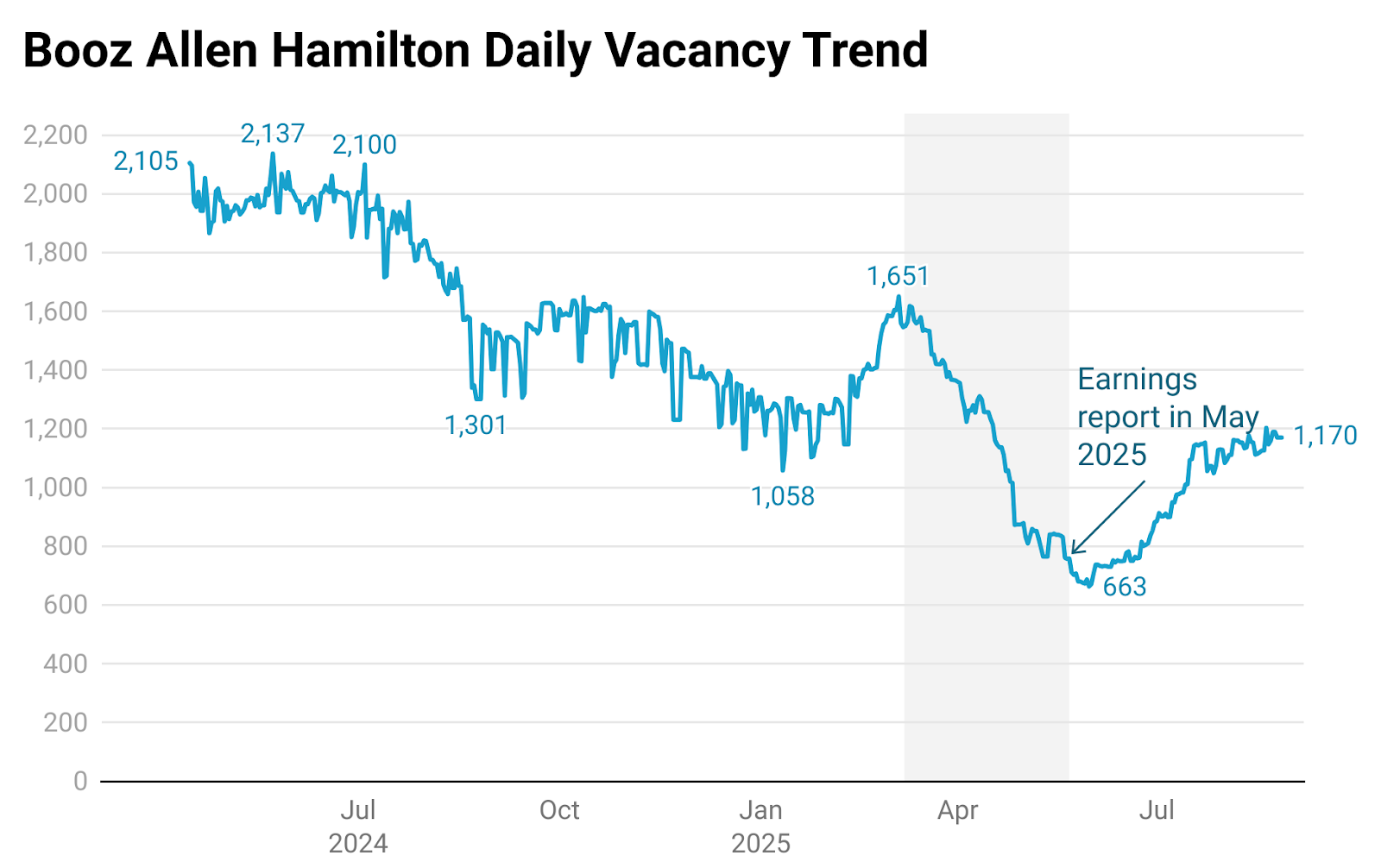
Shares of government services contractor Booz Allen Hamilton (NYSE: BAH) dropped 16.5% in May 2025 after a weak earnings outlook and layoffs tied to federal cost-cutting. Well before the announcement, job postings had fallen sharply, down 66% year-over-year and more than 50% below the March 2025 peak, signaling internal pressures ahead of the market reaction.
Huntington Ingalls
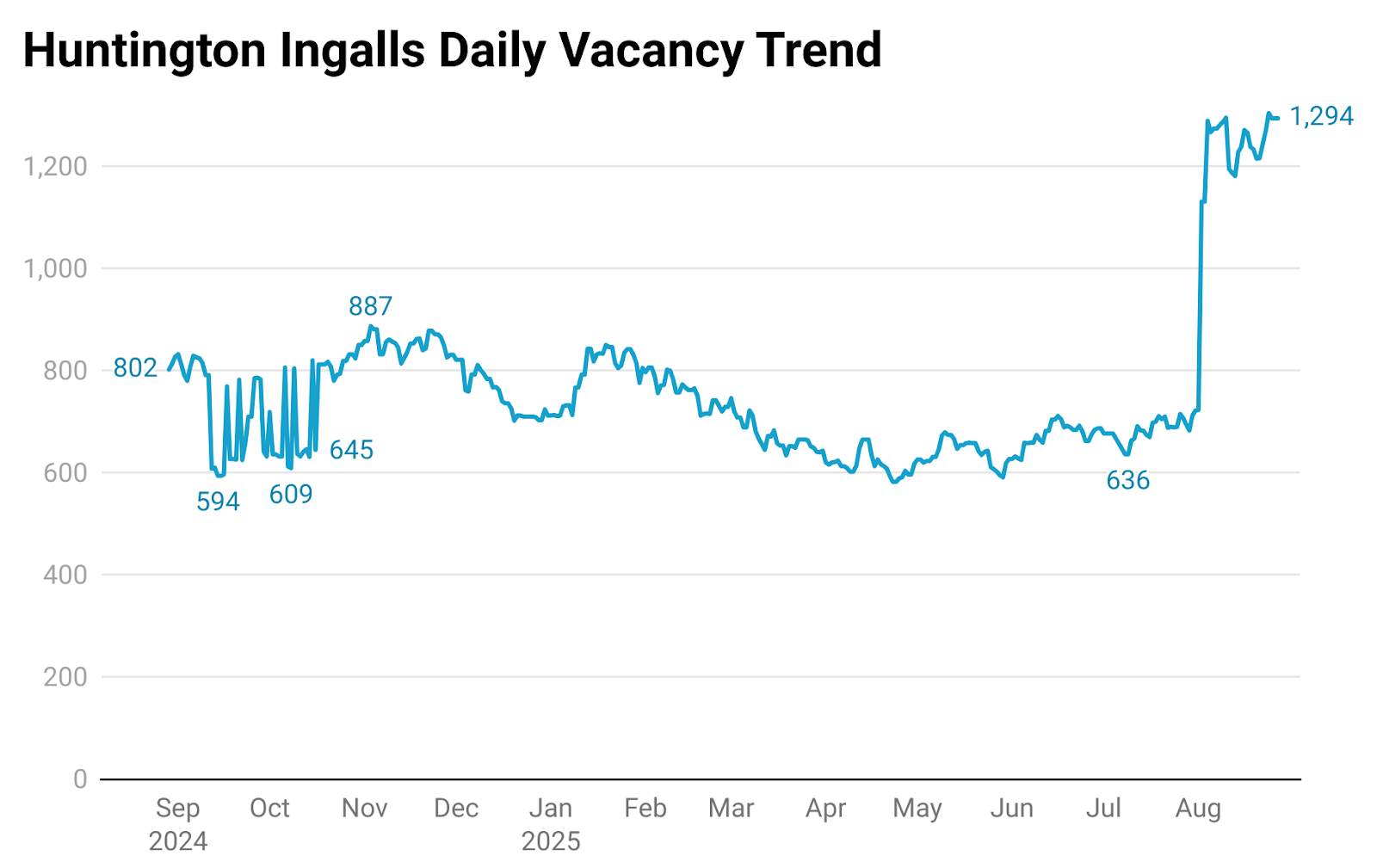
America’s largest military shipbuilder Huntington Ingalls (NYSE: HII) has seen its stock climb 47% year-to-date, in step with surging demand from defense contracts and new AI-driven partnerships. Job postings are up 79% since early August and 61% year-over-year, heavily concentrated in engineering, cybersecurity, and data science roles, an unmistakable sign of growth momentum.
Moderna
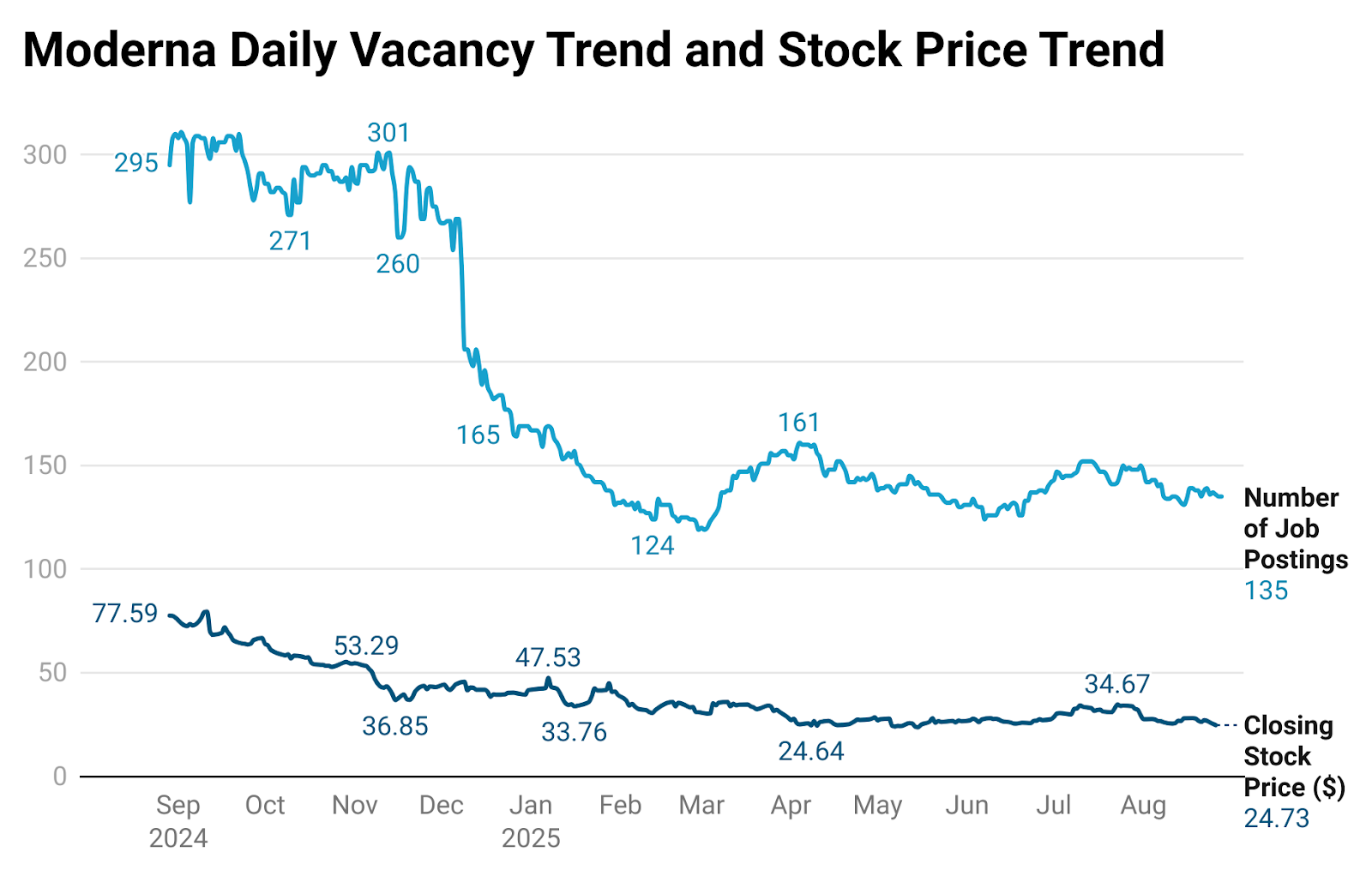
Moderna’s (NASDAQ: MRNA) job postings have fallen 54% in the past year, closely mirroring its 68% stock decline. The correlation between job counts and stock price was 0.86, showing how hiring activity can track investor confidence. The company has cut 10% of global staff while pivoting from COVID-19 vaccines toward newer mRNA treatments.
Quality Control: Ghost Jobs and Data Validation
Not all job postings reflect genuine hiring. Some “ghost jobs” remain posted for appearances or future pipeline building. Studies in 2023–2025 found that over 20% of postings were never filled in some sectors. Data providers reduce false signals by validating postings, removing duplicates, and identifying patterns of non-genuine listings.
Growing Data Budgets and Long-Term Use
Neudata’s 2024 survey shows that once firms integrate job posting data, they tend to maintain it over time. This reflects the data’s ongoing value in generating actionable signals and informing decision-making.
Conclusion
Job posting data goes beyond hiring figures; it shows where companies invest, pivot, or contract. Hedge funds can use this insight to act early, validate strategies, and uncover opportunities before they appear in traditional reports. The recent BLS data crisis, marked by political interference, underfunding, and declining survey reliability, has further underscored the risks of relying solely on official statistics. In an environment where trust in government data is wavering, investors need reliable, transparent, and validated alternatives.
That’s where specialized providers come in. Aspen Tech Labs delivers structured, high-quality job posting data that’s continuously validated, helping firms cut through the noise and act with confidence. With a proven track record supporting financial institutions, Aspen Tech Labs ensures that alternative data isn’t just timely and trustworthy, making it a strategic necessity for maintaining an information edge.