

How Recruitment Tech Companies Can Use Labor Market Data as Sales Intelligence
Whether your sales team is five people or 500, one of the most important factors in its success is the quality of its leads. Having a consistent source of high-quality leads can save your organization as a whole countless hours of tracking down and following up on low-quality leads or leads available to your competitors.
Labor market data can be such a source.
In this piece, we’ll explain how recruitment technology companies (including job boards, job advertising agencies, and HR software firms) can use labor market data to fuel their sales pipeline.
Track Growing Companies
Picture this: as soon as a business in your target audience posts new job openings to its website or ATS, your sales team gets a notification. The notification includes…
- The number of jobs posted
- Roles included.
- Location of the roles.
- Other relevant details.
This is possible with a custom JobMarketPulse dashboard. We scrape the web every day to identify new open roles at 200,000+ businesses around the country and the world. We can build you a custom dashboard where you can track job listings and trends according to your specific requirements.
For example, German software firm SAP, which became Europe’s most valuable technology company in October, has seen an 89 percent year-over-year increase in weekly job openings. Its shares have risen by 52 percent over the past 12 months (Figure 1).
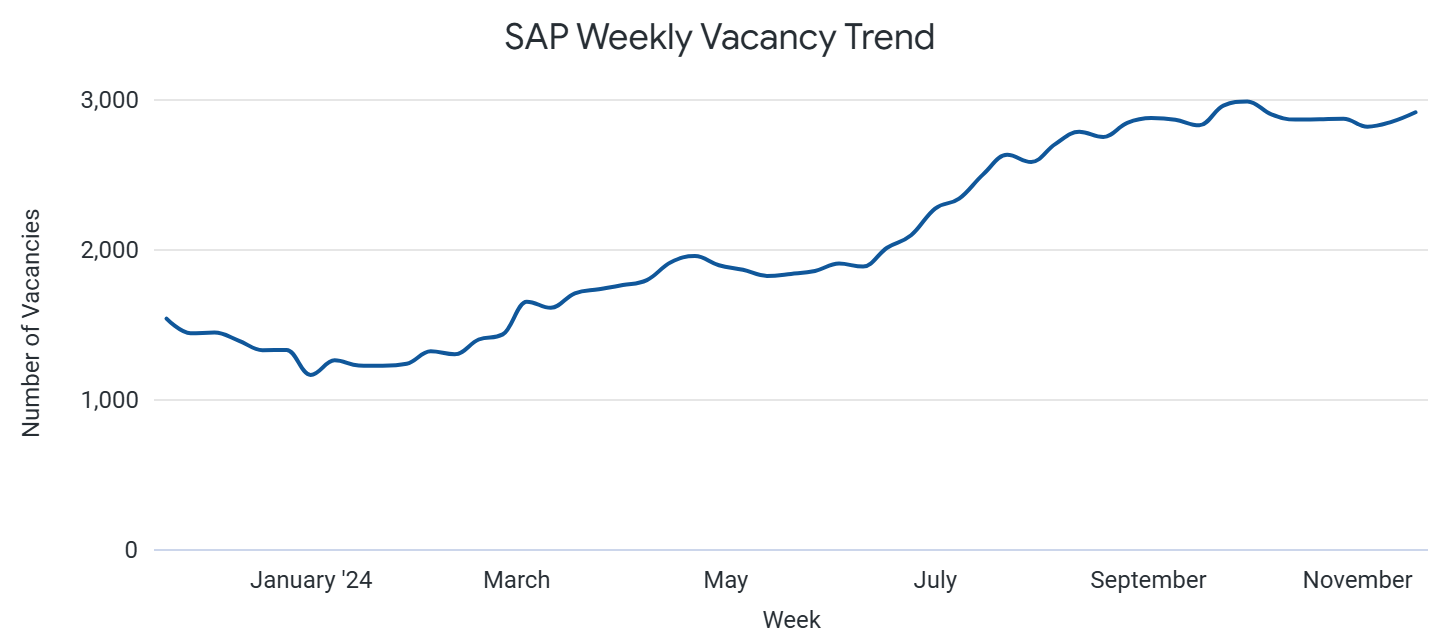
Figure 1: SAP vacancies, last 12 months
You could, of course, build scrapes to gather these jobs yourself. But unless you have several IT employees who can dedicate the bulk of their days to building and maintaining scrapes, it’s unlikely you can do it more efficiently than we can.
What’s more, building your own scrapes won’t give you access to historical data. When you work with us, you’ll have access to historical data on more than 100,000 companies worldwide dating back to September 2022.
Track Vacancy Duration
Another powerful signal in labor market data is vacancy duration – i.e., how long a job has been open. Companies with roles that stay open for a long time – or with perpetual openings – may benefit from various recruitment-related services:
- Companies with long-term executive and senior-level openings may benefit from headhunter or matchmaking offerings.
- Persistent openings in entry-level roles may signal an organization could use better training or onboarding resources.
- Above-average vacancy duration in any role might signal that the employer needs greater visibility for its listings – which job boards and recruitment advertising firms could certainly help with. (As of Q3 2024, average vacancy duration was 3.1 weeks, per our Q3 2024 U.S. Jobs Report.)
Another helpful signal? Major changes in any direction.
Track Major Vacancy Changes
As we’ve reported several times, employers often remove open job listings as an early indicator of financial distress. Amazon did this in 2022, shortly before its stock plunged to a 10-year low.
Intel, similarly, announced on August 1, 2024, that it would cut more than 15 percent of its workforce (about 17,500 people). But early warnings of distress came from unannounced changes to job postings (Figure 2): the first slowdowns happened in April. By June, the company had deleted more than half its open roles (mostly positions in engineering and development).
The chipmaker then missed earnings targets, sending shares plunging 26 percent on August 2, which was its second-worst day ever for market performance. As of this writing, shares are down more than 49 percent over the last year (Figure 3).
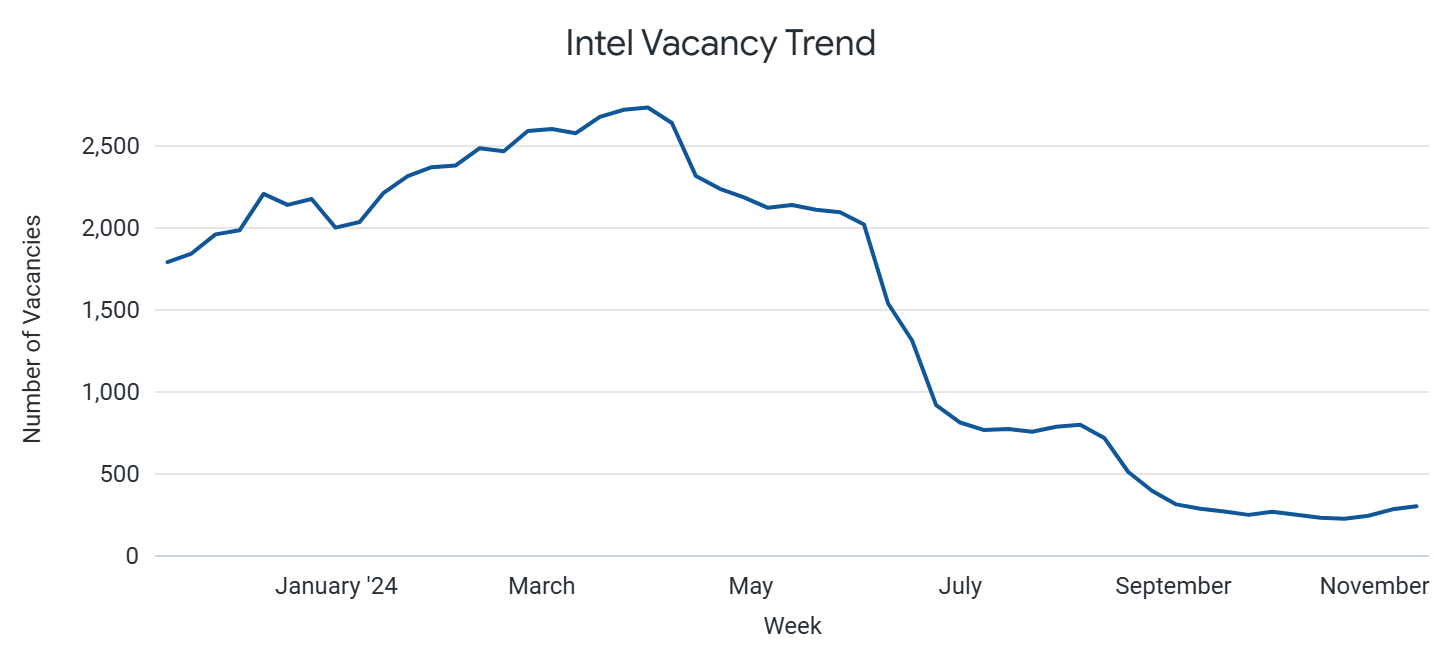 Figure 2: Intel vacancies, last 12 months
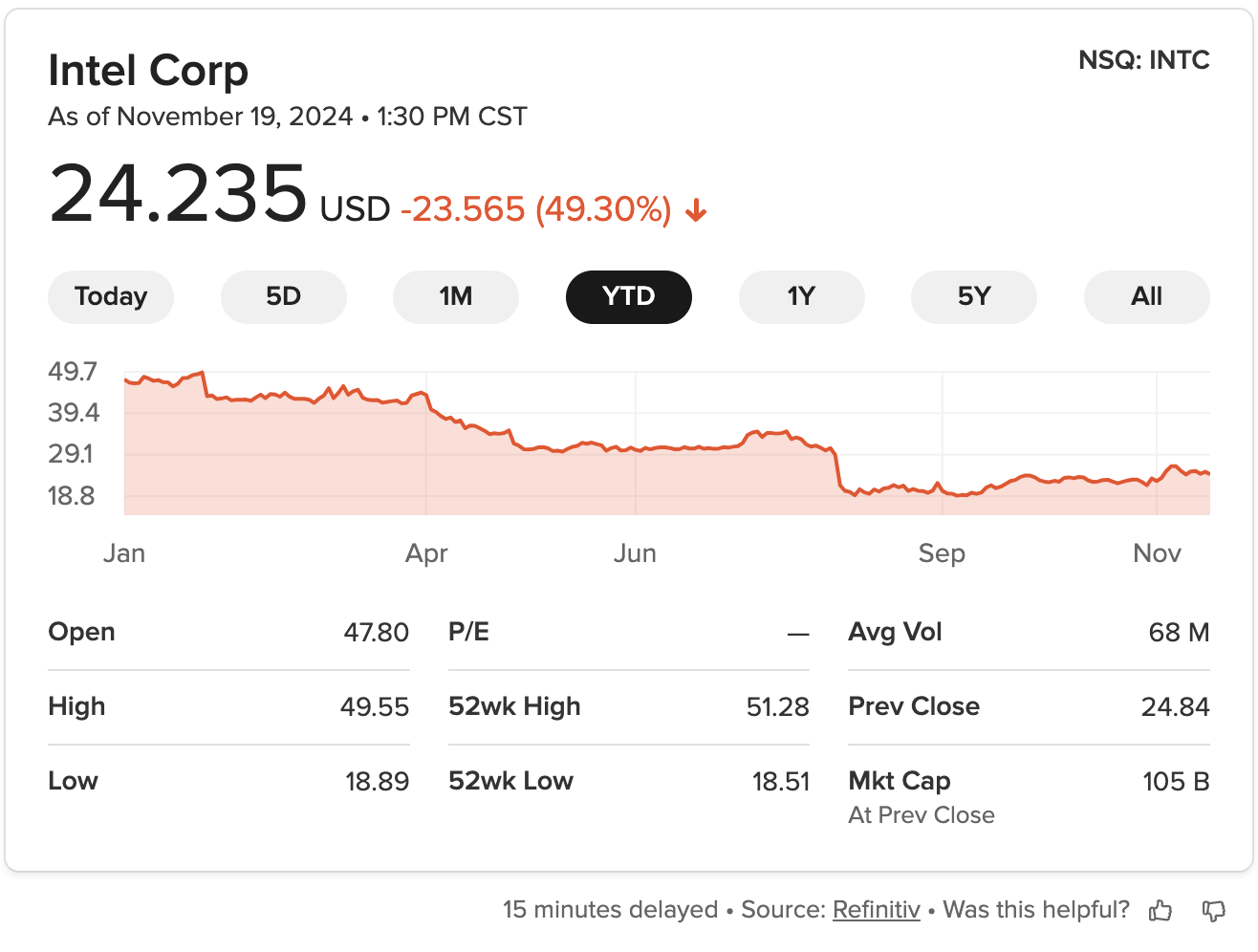
Figure 3: Intel share price, Nov. 19, 2023 – Nov. 19, 2024
Combine Labor Market Data with Other Data Sources
While it’s possible to use labor market data (and specifically new job posting data) on its own to guide sales outreach, this data is also valuable in combination with other business intelligence data – from sources like ZoomInfo, for example. And as of our latest release, our labor market data now includes domain names – unique identifiers that can make it even easier to combine data sources.
Data about funds raised, recent acquisitions, incorporation information, purchase intent signals, and more can paint a detailed picture about a potential client’s likelihood to need the services of a recruitment technology firm. Actual job listings signal that a company is actively in need of rec tech services.
Adding real-time labor market data to the other data sources your sales team relies on can help give you an edge over competitors.
Assess Fit and Reach Out
Once you have notifications, your sales team can assess whether a company is a fit for your services, then assign the lead to an appropriate sales associate.
As you see which leads convert best, you can adjust your custom feed to include more companies of that description or more flags for certain types of events (increase or decrease in listings, increase in certain types of listings, age of certain posts, etc.).
Over time, these kinds of insights and any other patterns you observe can become part of your proprietary guidelines for converting leads.
Other Use Cases for Labor Market Data
Labor market data has powerful applications for sales teams. But it can also be useful in a variety of other situations, including these:
- Understanding when and where competitors are expanding or contracting
- Monitoring organizational changes (e.g., big expansions in R&D hiring or tech hiring)
- Monitoring firms for pre-IPO signals
- Monitoring for signs of financial distress (like a sudden decrease in open roles)
We’d be happy to walk you through how to use labor market data to better understand each of these – just reach out!
Refine Sales Outreach with Real-Time Labor Market Data
If you’re eager to learn more about how real-time labor market data can give your sales team a fresh source of leads – and an edge over your competition – get in touch. We’d love to set you up with a free trial.
And if you’re curious about other ways labor market data can help your business grow, head over to 4 Ways to Use Labor Market Data to Grow Your Business.