

They Cut 10,000 Jobs. Then They Started Hiring Again.
Layoff announcements make headlines. What companies actually do with their workforce and hiring after those announcements rarely does. The job posting data tells a different and more nuanced story.
2025 and early 2026 brought a wave of layoff announcements that dominated tech headlines. Much of the coverage focused on a consistent theme: AI replacing workers, companies cutting costs, and a contracting job market.
Many of the companies announcing layoffs are the same ones that expanded rapidly during 2020 and 2021, when demand surged, and everything moved online. What is happening now is partly a correction. At the same time, there is real pressure to shift investment toward AI infrastructure. Together, those forces have driven a new phase of restructuring.
What the headlines rarely show is what happens next. Which roles disappear, which come back, and what a company’s job postings reveal about its actual priorities.
We tracked job posting data for four companies that made headlines in early 2026: Block, Meta, Salesforce, and Amazon.
One thing stands out across almost all of them: if you’re looking for opportunities, the US is still where the majority of roles are concentrated. More on that at the end.
Block: Radical Downsizing with a Revenue-First Hiring Strategy
In February 2026, Jack Dorsey made headlines by cutting nearly 4,000 jobs, shrinking Block’s workforce from ~10,000 to under 6,000. When Dorsey announced the cuts, he framed them as the inevitable consequence of AI tools changing what it means to build and run a company. But that framing deserves scrutiny. Block’s workforce had already tripled from roughly 3,900 employees in 2019 to about 12,500 by 2022 — growth that outpaced the company’s actual revenue by a wide margin. Dorsey himself acknowledged on X that the company had overhired during COVID, as reported by CBC News, and Block’s headcount had already been contracting for two years before AI was ever cited as the reason. Whether genuine AI efficiency gains, a
long-overdue unwinding of pandemic-era excess, or some combination of both drove the February 2026 cuts is a question the data alone cannot fully answer.
What the job posting data does show is what came after, and it tells a more specific story than the AI narrative suggests.
In the weeks around the announcement, Block’s open job postings dropped to zero, literally. For 17 consecutive business days in March, the company published no new roles whatsoever. Then, quietly, postings came back. Not for engineers, not for operations, not for product. Based on Aspen Tech Labs’ job data, Block added job postings almost exclusively for Territory Account Executives, the people who walk into small businesses and sell Square terminals.
The numbers make this pattern hard to ignore. From April 2025 to February 2026, Block’s active job postings grew by over 300%, peaking at 331 open roles. Today, that number sits at 46, down 86% from the peak, and 44% below where it was a year ago. What’s left is concentrated in five English-speaking markets: the US, UK, Canada, Ireland, and Australia. Whatever role AI played in the cuts, the hiring that followed points to something simpler: a company that stripped out corporate overhead and concentrated its remaining hiring almost entirely in one function, the people who directly close revenue.
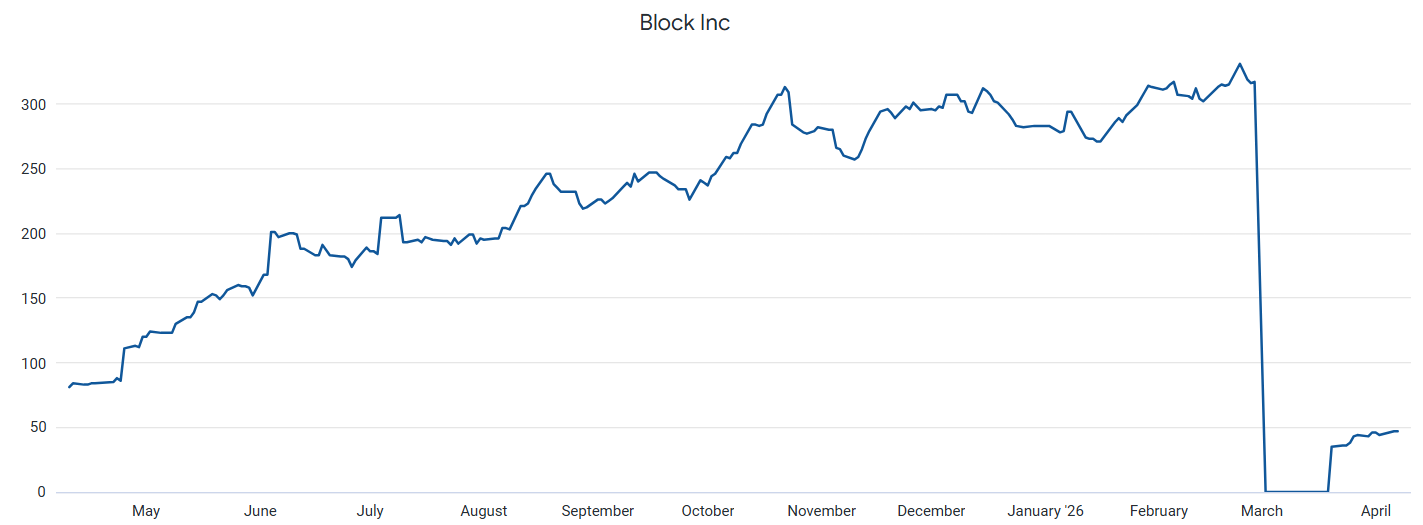
Figure 1: Block Inc. Active Job Postings (May 2025–April 2026): A 300% Rise and 86% Collapse
Meta: A Prolonged Quiet Retreat Before the Public Collapse
Meta’s latest round of layoffs didn’t start in March 2026. The hiring data shows company that had been quietly pulling back for almost a year before the headlines hit. This pullback comes as Meta continues to shift investment away from its metaverse strategy and toward AI.
In April 2025, Meta had nearly 1,930 active job postings. No dramatic announcement, no press release, just the beginning of a slow, steady decline that ran through the entire year. By February 2026, that number had already fallen to around 1,150. That’s a 40% reduction in open roles over ten months, largely unnoticed because it happened gradually, one fewer posting at a time.
Then March arrived. As Meta confirmed rounds of cuts across Reality Labs, recruiting, sales, and global operations, the career site reflected it immediately. Postings fell from ~1,150 to a low of 646 in a single month, another 44% drop in weeks. From peak to trough, Meta shed 60% of its visible hiring activity.
What’s left is telling. Of the ~770 current openings, more than half are concentrated in just three categories: Software Developers, Scientists, and AI Specialists. The US accounts for 73% of all postings, with Singapore and Ireland as distant secondary hubs. Account Managers and Product Managers still appear, but far down the list.
To understand what those numbers reflect, it helps to know what Meta has been walking away from. Since renaming the company after its metaverse vision in 2021, Meta has spent more than $70 billion on Reality Labs, a bet that never came close to mainstream adoption. When ChatGPT arrived in November 2022 and ignited the AI race, Meta was caught off guard and has been in catch-up mode since. The 2026 layoffs at Reality Labs, combined with the closure of VR game studios and the quiet shelving of advanced headset development, were less a strategic pivot than an admission that the original bet had failed. What the hiring profile now reflects is a company redirecting its capital toward AI infrastructure, one that looks considerably less like the social media giant that once promised to build the next internet, and considerably more like a company trying to avoid being left behind by the one that actually arrived.
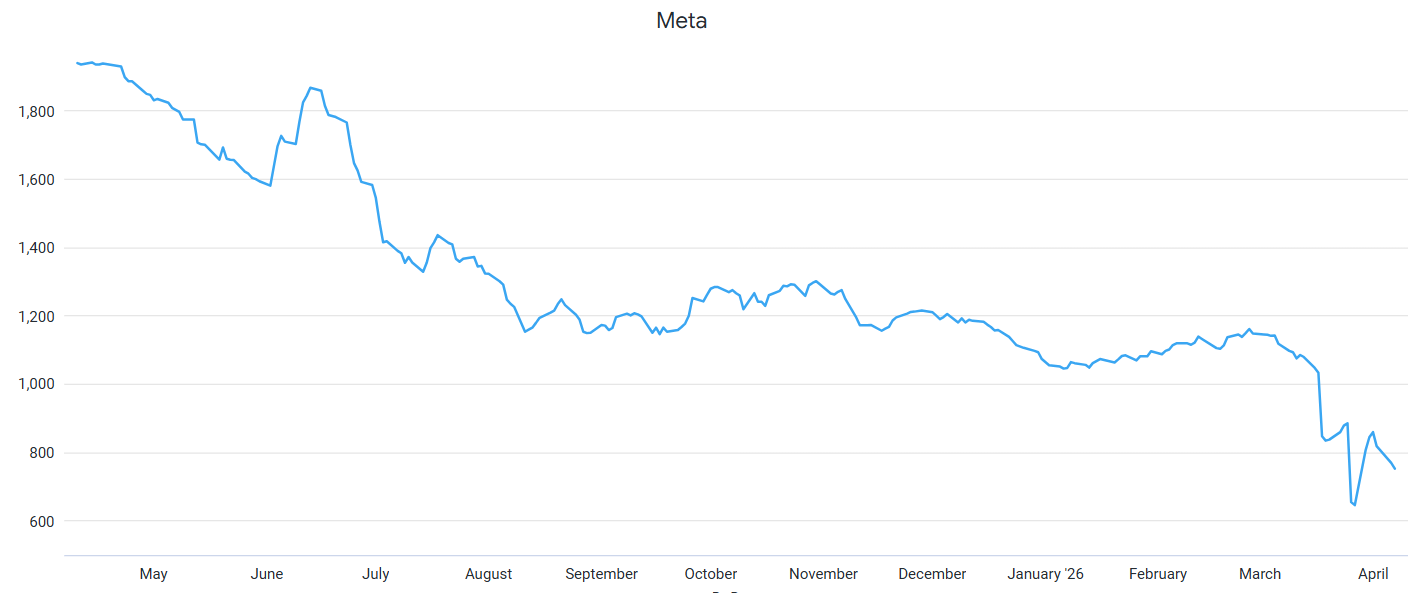
Figure 2: Meta Platforms Active Job Postings (May 2025–April 2026): Gradual Decline Followed by a Sharp Drop
Salesforce: Simultaneous Layoffs and a Hiring Surge
Salesforce cut nearly 1,000 roles in early 2026, including marketing, product management, data analytics, and even parts of its own Agentforce AI unit. The headlines were straightforward: another tech giant trimming headcount and blaming AI efficiency.
In April 2025, Salesforce had around 1,117 open positions (Figure 3). That number climbed through spring, peaked near 1,500 in late May, then fell steadily through the summer and autumn, bottoming out at 897 in early October 2025, a 40% drop from the spring peak. That quiet contraction happened well before any public layoff announcement.
Then something unexpected: a steady, sustained recovery. From October’s low, postings climbed back month by month. By the end of March 2026, the same month Salesforce announced its cuts, active job postings had reached 1,484, essentially back at the spring 2025 peak. The layoff announcement and a hiring surge happened simultaneously.
Compared to a year ago, Salesforce today has 29% more open roles than it did in April 2025.
The composition of those roles is the real story. Account Managers dominate at 376 postings, more than all software and engineering roles combined (244). Sales Representatives, Business Development Specialists, and Sales Directors add another 174. This is a company that cut internal operations and doubled down on revenue-generating headcount.
Geographically, Salesforce’s hiring is notably global. The US leads with 434 postings, but India (183), Ireland (121), and Japan (100) follow, suggesting a deliberate strategy to build sales and support capacity in lower-cost or strategic markets rather than concentrating growth at HQ.
Salesforce removed the roles that AI can absorb and replaced them with the roles that close deals. The net effect is a company that ended the period larger than it started, with a workforce more concentrated in revenue generation than at any point in the data.
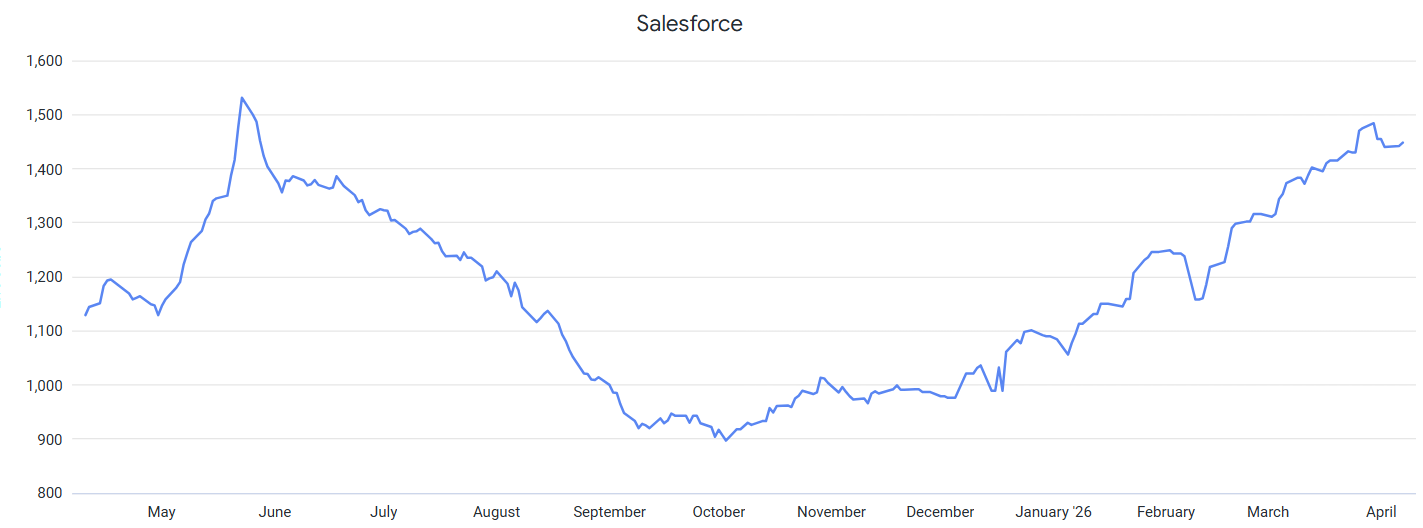
Figure 3: Salesforce Active Job Postings (May 2025–April 2026): Contraction, Recovery, and Simultaneous Layoff Surge
Amazon: When the Real Decision Precedes the Announcement
In January 2026, Amazon made headlines by eliminating 16,000 corporate roles, framed as an effort to flatten management layers and redirect investment toward AI. It was one of the largest single layoff events of the year.
But for anyone watching the hiring data, the January announcement was less a surprise than a confirmation of what the numbers had already been saying for months.
Amazon’s job postings peaked at nearly 24,850 in June 2025, a figure that includes both corporate and warehouse roles across its global operations. From that point, postings fell steadily and sharply, month after month, without any public announcement. By the time the layoff news broke in January 2026, active postings had already dropped to around 11,100, a 55% decline that had been unfolding quietly for seven months.
The recovery since then has been significant. From January’s low, postings have climbed back to nearly 18,000 by early April, a 61% rebound in just three months. Yet Amazon still sits 26% below where it was a year ago, and 28% below its June 2025 peak.
One important caveat: Amazon’s numbers are not directly comparable to the other companies in this analysis. These postings span the entire business, fulfillment centers, construction, retail, and corporate, all counted together. IT and Business Services lead with roughly 8,400 combined roles, but Maintenance, Warehouse, and Construction together account for over 1,100 more roles. The “Amazon layoffs” narrative focused on the corporate side, but the career site reflects a much larger and more complex machine.
Geographically, the US dominates with 9,064 postings, just over half the total, with India (2,717) and Japan (841) as the next-largest hiring markets. This distribution reflects AWS and Alexa engineering capacity in India, and Amazon’s aggressive retail and logistics expansion across Asia.
What Amazon’s data actually shows is a company that quietly made its structural decisions, let the numbers shrink for half a year, and then announced what had already happened. By the time the press release landed in January, the real decision had been made sometime around August 2025.
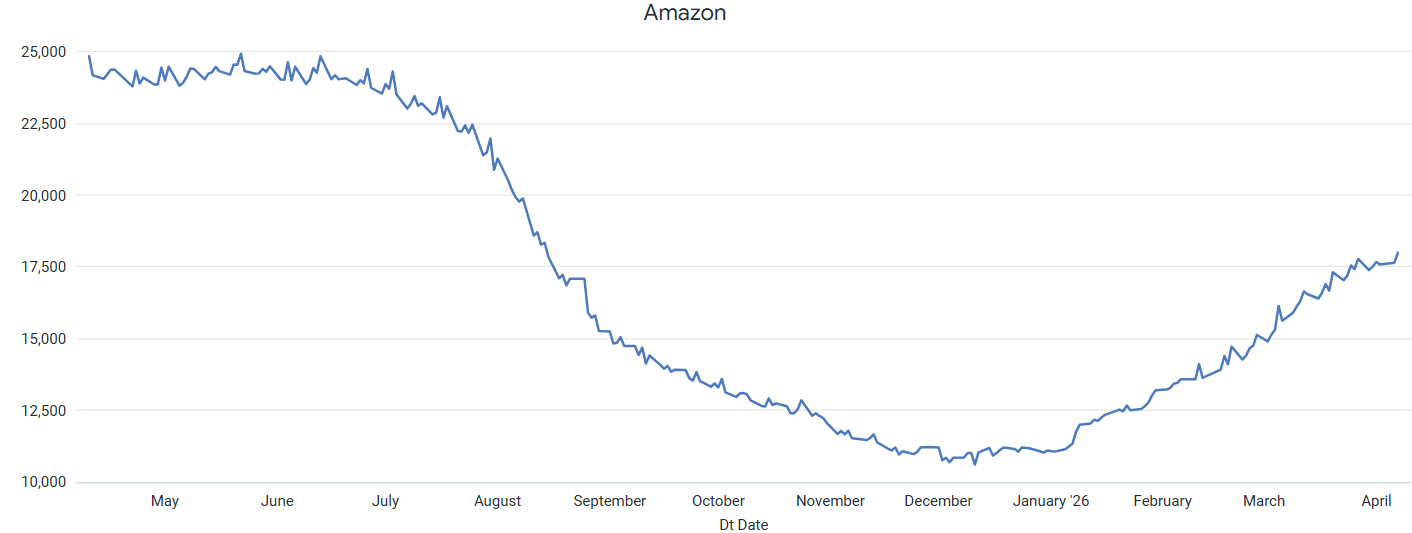
Figure 4: Amazon Global Job Postings (May 2025–April 2026): Peak, Silent Decline, and Partial Recovery
Where the Opportunities Are: The Geography of Post-Layoff Hiring
Across all four companies, the United States remains the dominant hiring market by a significant margin. Meta directs 73% of its current openings there. Amazon’s US postings account for just over half its global total. Block’s remaining roles are concentrated across five English-speaking markets, with the US at the center. Salesforce is the most geographically distributed of the four, with meaningful activity in India, Ireland, and Japan, but the US still leads.
Outside the US, the realistic options narrow to a handful of markets. Ireland and Singapore appear consistently as secondary hubs, reflecting their established roles as regional headquarters for US technology companies in Europe and Asia-Pacific, respectively. India features prominently for technical roles at Amazon and Salesforce. However, this reflects a broader strategy among US tech companies to build engineering capacity in lower-cost markets rather than an expansion of senior or strategic positions.
The US remains the place with the highest volume, the greatest seniority, and the most visible recovery in postings.
Conclusion: Job Postings as a Leading Indicator
The four companies examined here made headlines for the same reason, but the stories their career sites tell are meaningfully different. Block rebuilt entirely around direct sales. Meta’s contraction was slow and largely invisible before a sharp public drop confirmed what the data had been signaling for months. Salesforce cut one category of worker and immediately backfilled with another, ending the period with more open roles than it started with. Amazon’s January 2026 announcement was a delayed press release for decisions made half a year earlier.
Taken together, these patterns point to something worth paying attention to: public layoff announcements are a lagging indicator. By the time a company makes an official statement, the structural decision has often already been made, and the company’s hiring activity has already begun reflecting it. For researchers, investors, and job seekers alike, hiring data offers earlier and more granular signals than official communications ever will.
The directional shift is consistent across all four companies. Roles tied to internal operations, middle management, and functions that can be automated are contracting. Roles at the intersection of human judgment and revenue generation, particularly in sales and technical infrastructure, are holding or growing.
What is happening is less a replacement story than a reallocation story. Companies are reducing the cost of certain internal functions and redirecting that capital toward what they believe technology cannot yet replicate. The job posting, unglamorous and often overlooked, turns out to be one of the most honest documents a company publishes. It reflects not what leadership says it values, but what it is actually willing to pay for.
Data Methodology
The findings in this analysis are based on Aspen Tech Labs’ JobMarketPulse platform, which monitors hiring activity from more than 300,000 direct employer career sites worldwide. This dataset captures a substantial share of live postings and provides near-real-time insight into employer demand. All figures reflect information published directly by employers, including salary ranges where available. All data comes from posted job requirements; salary figures should be interpreted as indicators of market trends rather than confirmed offer amounts. Changes reflect real shifts in hiring activity rather than database expansion or methodological updates.